

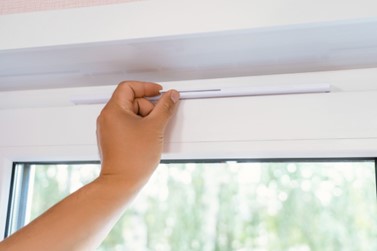
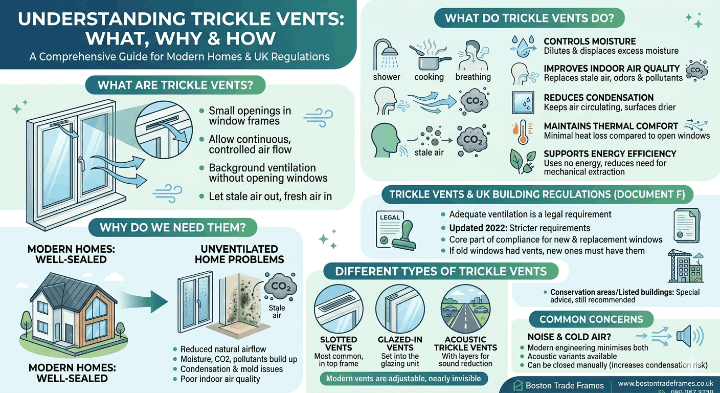
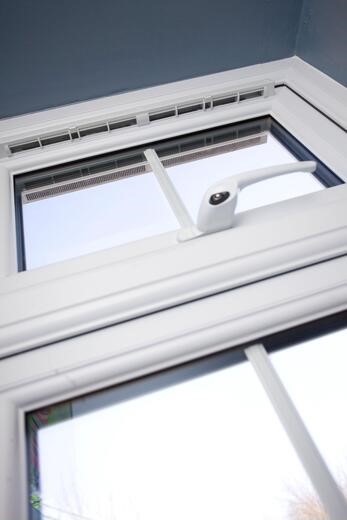
Trickle vents are small openings built into a window frame that allow a controlled amount of air to pass through continuously, even when the window is closed. They sit at the top of the window frame and provide background ventilation without you needing to open windows.
If you have ever noticed a slim slot along the upper part of the frame on modern windows, that is a trickle vent.
In short: they let stale air out and fresh air in, quietly and constantly, without a draught.
Why does background ventilation matter?
Modern homes are increasingly well sealed. Double glazing, insulation and draught-proofing all reduce heat loss, which is great for energy bills, but it also means the natural flow of fresh air that older properties had through gaps and cracks is gone.
Without adequate ventilation, moisture, CO2 and airborne pollutants build up indoors. This leads to condensation on windows and walls, mould growth and poor air quality – all of which affect your health and your home.
Trickle vents solve this by keeping a steady flow of fresh air moving through the property without you needing to open windows, which matters particularly in the winter months when opening windows feels like throwing money out of the door.
What do trickle vents do?
Here is a straightforward breakdown of what a trickle vent does day to day:
- Controls moisture – excess moisture from cooking, showering and breathing is diluted and displaced by the controlled amount of air passing through
- Improves indoor air quality – stale air carrying CO2, odours and pollutants is replaced with fresh air
- Reduces condensation – by keeping air circulating, surfaces stay drier
- Maintains thermal comfort – because the opening is small, the heat loss is far lower than cracking open a casement window
- Supports energy efficiency – a trickle vent uses no energy and reduces the need for mechanical extraction in many rooms
Trickle vents and UK building regulations
This is where it gets important for anyone buying new windows or having replacement windows installed.
Under Document F of the UK building regulations, adequate ventilation is a legal requirement for habitable rooms. When you replace windows in an existing property, if the old windows had trickle vents, the new ones must include them too. For new build properties, trickle vents are required as standard across most window types.
The current building regulations were updated in 2022, and the ventilation requirements became stricter. Background ventilation through trickle vents is now a core part of compliance for most new and replacement window installations.
If you live in a conservation area or have a listed building, there are some exemptions and alternative ventilation strategies that a specialist installer can advise on, but in most cases trickle vents will still be recommended.
Different types of trickle vents
Not all trickle vents are the same. The main types you will come across include:
- Slotted vents – the most common type, a narrow slot built into the top of the window frame. These suit casement windows and sash windows alike.
- Glazed-in vents – set into the glazing unit rather than the frame design, useful where the frame profile is narrow.
- Acoustic trickle vents – designed for noise reduction in areas with high noise levels, such as near busy roads or flight paths. They allow fresh air in while reducing the amount of external sound that passes through.
Modern trickle vents are significantly better than older designs. They can be opened and closed manually, giving you control over the amount of air coming in, and many are designed to be nearly invisible within the window frame so they do not affect the appearance of your windows.
Do trickle vents let in noise and cold air?
This is one of the most common concerns. The honest answer is that a small amount of noise and cold air will pass through any open trickle vent, but modern trickle vents are engineered to minimise both.
Acoustic variants reduce noise transfer considerably. For thermal comfort, the volume of air through a trickle vent is small enough that the impact on room temperature is minimal compared to the benefit of good air quality.
Closing the vent entirely is always an option, though it is worth understanding that doing so for extended periods will reduce indoor air quality and increase condensation risk.
Fitting trickle vents to your windows
At Boston Trade Frames, trickle vents can be incorporated into a wide range of window profiles, from casement windows to sash windows, and are fitted to meet current building regulations as standard on qualifying installations.
If you are unsure whether your existing windows comply, or you are planning a replacement window project, our expert team can advise on the right ventilation solution for your property.
Get in touch with the team at Boston Trade Frames to discuss your requirements.
Back to news