

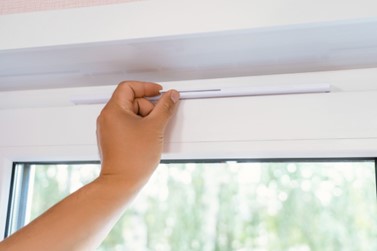
Trickle vents are small ventilation slots built into the top of your window frame, designed to provide a continuous, low-level flow of air between in and out.
Since 2022, they’ve been legally required to be incorporated in more or less any replacement window project in England and Wales, though some exceptions do apply. There are several good reasons for this, as trickle vents control moisture and prevent black mould, whilst improving the overall quality of your indoor air.
As a homeowner, we understand you may have concerns that this legal requirement will impact the cost of your window replacement. Trickle vents do add to the price of a window replacement slightly, but it’s often only between £10-£30 per window, and the payoff is a much healthier indoor space, which is why they’re now a requirement.
We’ll cover them in more depth below and detail how a window replacement in 2026 not only offers you better thermal performance, aesthetics and style, but also healthier air quality thanks to trickle vents.
What is a trickle vent on a window?
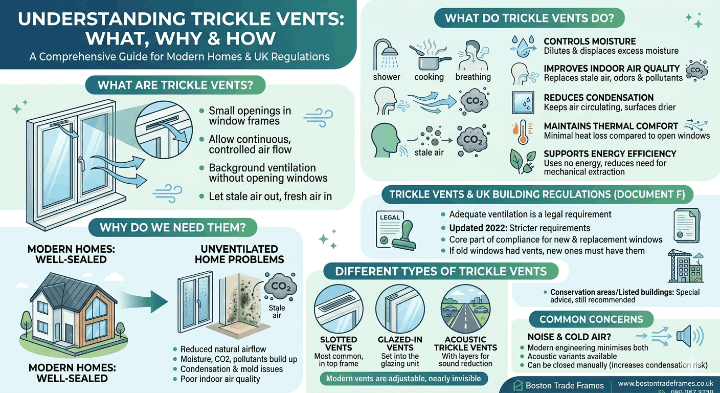
A trickle vent is a small, discreet ventilation system fitted into the top of the window frame, sometimes called a slot vent or background vent. It allows a consistent flow of fresh air in and stale air out, without you needing to open your windows at all.
Modern homes are well insulated, great for keeping energy bills down, but that airtightness can trap moisture, cooking smells, allergens and carbon dioxide inside. Trickle vents are the simple, practical solution. Here’s what they do:
- Control excess moisture: Helping to prevent condensation, damp patches and black mould on walls and window sills
- Improve indoor air quality: Replacing stale air with fresh air on an ongoing basis
- Keep your home secure: You get proper ventilation without ever needing to leave a window open
- Work quietly in the background: You won’t notice them doing their job, but you’ll notice the difference if they’re not there
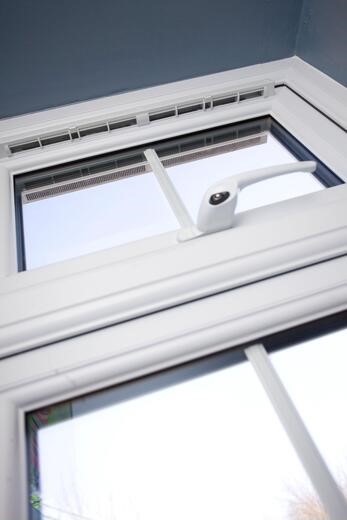
Modern trickle vents are far subtler than older designs. They sit neatly at the top of your window frame, are available in colour-matched finishes and are designed to blend in rather than stand out.
Under Approved Document F, the part of UK building regulations covering ventilation requirements, trickle vents became a legal requirement for new build properties and replacement windows in England from 15 June 2022 and in Wales from 23 November 2022.
How do trickle vents work?
The concept is straightforward. Here’s how it works step by step:
- Fresh air enters at the top: External air trickles in through the vent at the top of the window frame, high up near the ceiling
- It mixes with warm indoor air: Because fresh air enters high up, it naturally mixes with warmer air already in the room rather than creating a cold draught at floor level
- Stale, moist air escapes: As fresh air circulates in, the stale air and excess moisture that builds up from everyday activities like cooking, breathing and drying clothes is displaced
- You stay in control: Modern trickle vents have a controllable flap or baffle on the inside, so during the winter months you can reduce the airflow without losing ventilation entirely
The result of this process is background ventilation that’s running constantly and quietly, helping to maintain a perfect balance of ventilation and thermal comfort throughout your home.
Will trickle vents be installed with my new windows?
In most cases, yes, and here’s why.
Under current building regulations (Approved Document F), trickle vents are required in the following situations:
- Replacement windows: Even if your old windows didn’t have trickle vents, your new replacement windows must include them
- New build properties: All new builds must meet ventilation requirements from the outset
- Like-for-like replacements: Even if you’re replacing a window with an identical style, the new window frame must include trickle vents to comply with Part F
It’s worth noting that leaving a window on a night latch is not an acceptable alternative under building regulations, it doesn’t meet the required standard because it compromises both security and weatherproofing.
The exceptions, where trickle vents may not be required
These situations are genuinely rare, but there are scenarios where the installation of trickle vents may not be strictly necessary:
- Whole-house mechanical ventilation: If your property uses a continuous mechanical ventilation system such as MVHR (Mechanical Ventilation with Heat Recovery), which handles ventilation for the entire home, trickle vents in the existing frame may not be needed
- Listed buildings and conservation areas: If your home is a Grade I or Grade II listed building or sits within a conservation area, and adding trickle vents would unacceptably alter the historic appearance, an exemption may apply, but this must be confirmed by your local Building Control officer or Conservation Officer
If you’re unsure which category your home falls into, we’re always happy to talk it through.
What are the benefits of trickle vents?
Beyond being a legal requirement, trickle vents genuinely make your home a more comfortable, healthier place to live. Here’s a summary of the key benefits:
- Fewer condensation problems: By keeping humidity levels in check, trickle vents help protect your window frames, walls and furnishings from the damp and mould caused by excess moisture
- Better quality of air indoors: Everyday pollutants, allergens, cooking fumes and CO₂ build up quickly in a well-sealed home; trickle vents keep a consistent flow of fresh air circulating
- Security without compromise: You get a steady flow of fresh air without leaving open windows, which matters especially at night or when you’re out
- Energy efficiency: Rather than throwing a window wide open and losing heat, trickle vents provide natural ventilation in a controlled way, meaning less energy is wasted. It’s widely-known that poor ventilation is one of the leading causes of damp and mould in UK homes, issues that affect the long-term condition of your window frames and surrounding walls
- Noise reduction options: If you live near a busy road or railway, specialist acoustic trickle vents allow adequate background ventilation while keeping noise levels to a minimum
Replacement windows from Boston Trade Frames
All of our replacement windows can be fitted with trickle vents as standard, so your new glazing will meet current building regulations from day one.
We manufacture using the Kömmerling C70 and O70 systems, high-performance uPVC profiles with a 5-chambered design for excellent heat insulation and U-values of 1.2 W/m²K as standard. That means less heat transfer, lower energy consumption and a warmer home year-round. We also offer aluminium frames, an incredibly strong metal. If it’s slimmer sightlines and wider expanses of glass you’re after, we’d always recommend aluminium.
Our replacement window styles include:
- Casement windows: The classic choice for most home styles, the most popular in the UK
- Flush sash windows: An in-demand look with a smooth, flat profile, options like traditional casements
- Sliding sash windows: Open by sliding up and down, particularly popular if it’s a traditional look and plenty of ventilation that you’re after
- Tilt and turn windows: Versatile and easy to clean, great for upper floors
- French windows: Where you want a wider opening connecting inside to outside
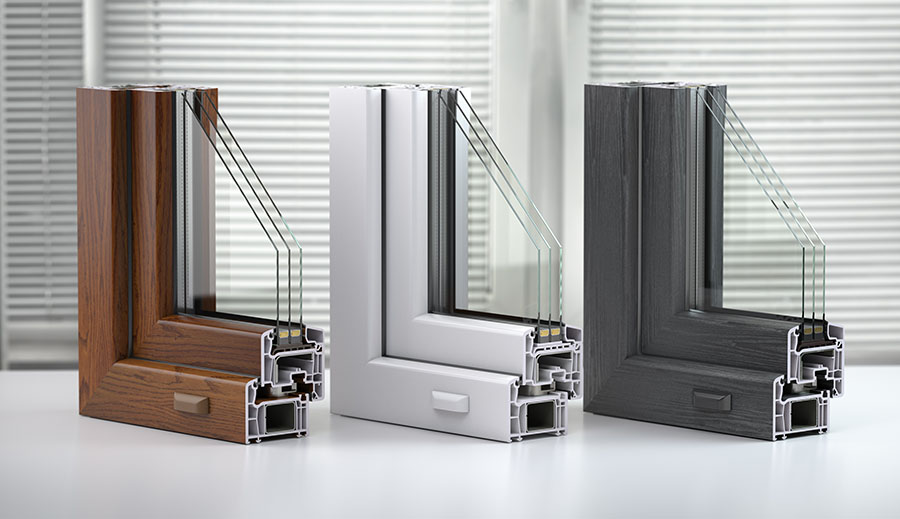
All styles are available in a wide range of colours and finishes, from classic white uPVC to anthracite grey and woodgrain foils.
Why trust Boston Trade Frames with your window replacement?
We’ve been manufacturing windows and doors in Boston, Lincolnshire since 1981, over 45 years of experience built on honest advice, quality products and fair pricing. We’re a family business, led by owner and managing director Nigel Apps and his daughter, and that ethos runs through everything we do.
We’re Certass certified installers, meaning our installations are independently assessed against UK building regulations, giving you confidence that everything is done properly, including your trickle vent requirements under Document F.
If you have any questions about our replacement window range or want to know more about trickle vents and whether they apply to your property, we’d love to hear from you. Get in touch today for a free, no-obligation quote.
01205 311144
Nursery Road Industrial Estate, Boston, PE21 7TN